CDM info
The history
The Construction (Design and Management) Regulations (CDM) in the UK were established in 1994 and updated in 2007 and 2015.
They were introduced to improve health and safety standards by mandating proactive risk management from project inception to completion.
This info pag focuses on the current revision, 2015.
L153
Published 2015
L153 is freely downloadable and a must have for anyone involved in construction works. It provides guidance on the legal requirements of CDM 2015.
L153 describes:
- the law that applies to the whole construction process on all construction projects, from concept to completion; and
- what each duty holder must or should do to comply with the law to ensure projects are carried out in a way that secures health and safety.

CITB
Construction (Design and Management) Regulations
CITB has also produced industry guidance written by industry volunteers appointed via the Construction Industry Advisory Committee (CONIAC).
You can find this and download it at your convenience to help plan your projects.
what is construction work
Definition
Construction work means the carrying out of any building, civil engineering or
engineering construction work, examples includes:
- Building or maintaining structures (including temporary works)
- Decommissioning, demolition or dismantling of structures.
A more comprehensive list can be found in Regulation 2 Interpretation.

where does cdm apply
application
CDM 2015 applies to all construction projects (notifiable and non-notifiable) in Great Britain, as well as the territorial sea and construction of any renewable energy structure in the renewable energy zone.
For example, an oil and gas topside or jacket being delivered from the north sea via semi submersible crane vessel to a UK disposal and recycling yard must consider that CDM applies, in territorial seas during transport, not just during load in and set down.
- Territorial sea means the belt of waters extending from the coast of Great Britain up to 12 nautical miles.
- The renewable energy zone: areas outside the territorial sea designated for the exploration or exploitation of energy from water or winds.

CDM regulations & Schedules
alot to consider
There are 39 Regulation, 5 schedules and 5 appendices which require your attention in the compliant and successful application of CDM 2015 regulations.
Do not rely on memory, use the guidance in your decision making.
CDM dutyholders
Who are they?
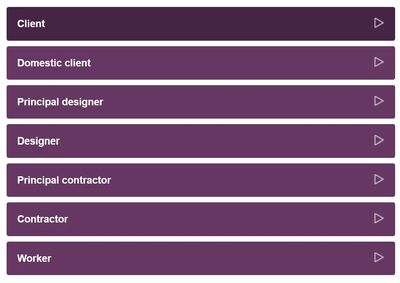
The key duty holders include:
- The Client
- Principal Designer
- Principal Contractor
- Designers
- Contractors (including workers)
They must cooperate, communicate, and coordinate with each other to manage risks, with specific duties assigned to pre-construction and construction phases to ensure project safety.
Clients
Who are they?
Simply, a “client” is any person for whom a project is carried out. Client duties are covered under CDM Regulation 4 in relation to managing
projects.
They are responsible for making suitable arrangements for managing a project.
This includes making sure:
- other duty holders are appointed;
- sufficient time and resources are allocated.
Make sure:
- relevant information is prepared and provided to other duty holders;
- the principal designer and principal contractor carry out their duties;
- welfare facilities are provided.